


Open Science at UFL
The Private University in the Principality of Liechtenstein (UFL) regards Open Science as a forward-looking approach to fostering open, transparent and responsible research. By adopting its institutional position on Open Science, UFL has formally committed to international Open Science principles for the first time, laying the foundation for the continued development of an open research culture.
Open Science aims to make scientific knowledge as accessible, transparent and reusable as possible – for the benefit of research, society, the economy and public policy.

What is Open Science?
Open Science encompasses a range of practices that promote greater openness in research. Its aim is to enhance the transparency of scientific knowledge, foster collaboration and make research outputs as openly accessible as possible.
Key elements of Open Science include:
Open Science enhances the visibility of research, facilitates international collaboration and helps to make research more transparent and efficient.
Why Open Science?
Open Science creates value for everyone involved.
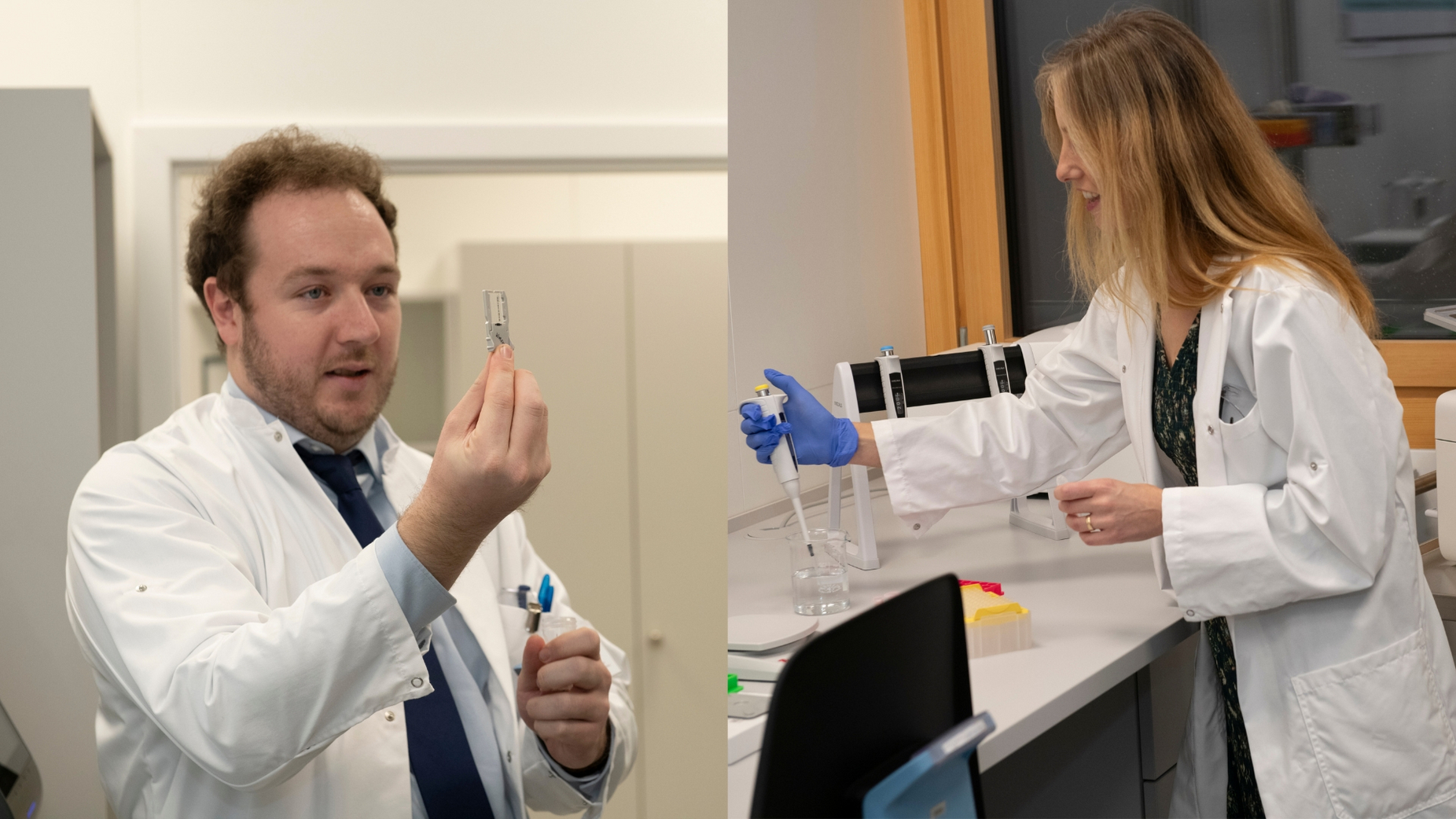
For Researcher
- greater visibility of research
- wider reach and higher citati0on rates
- better international networking
- improved chances of success in funding applications
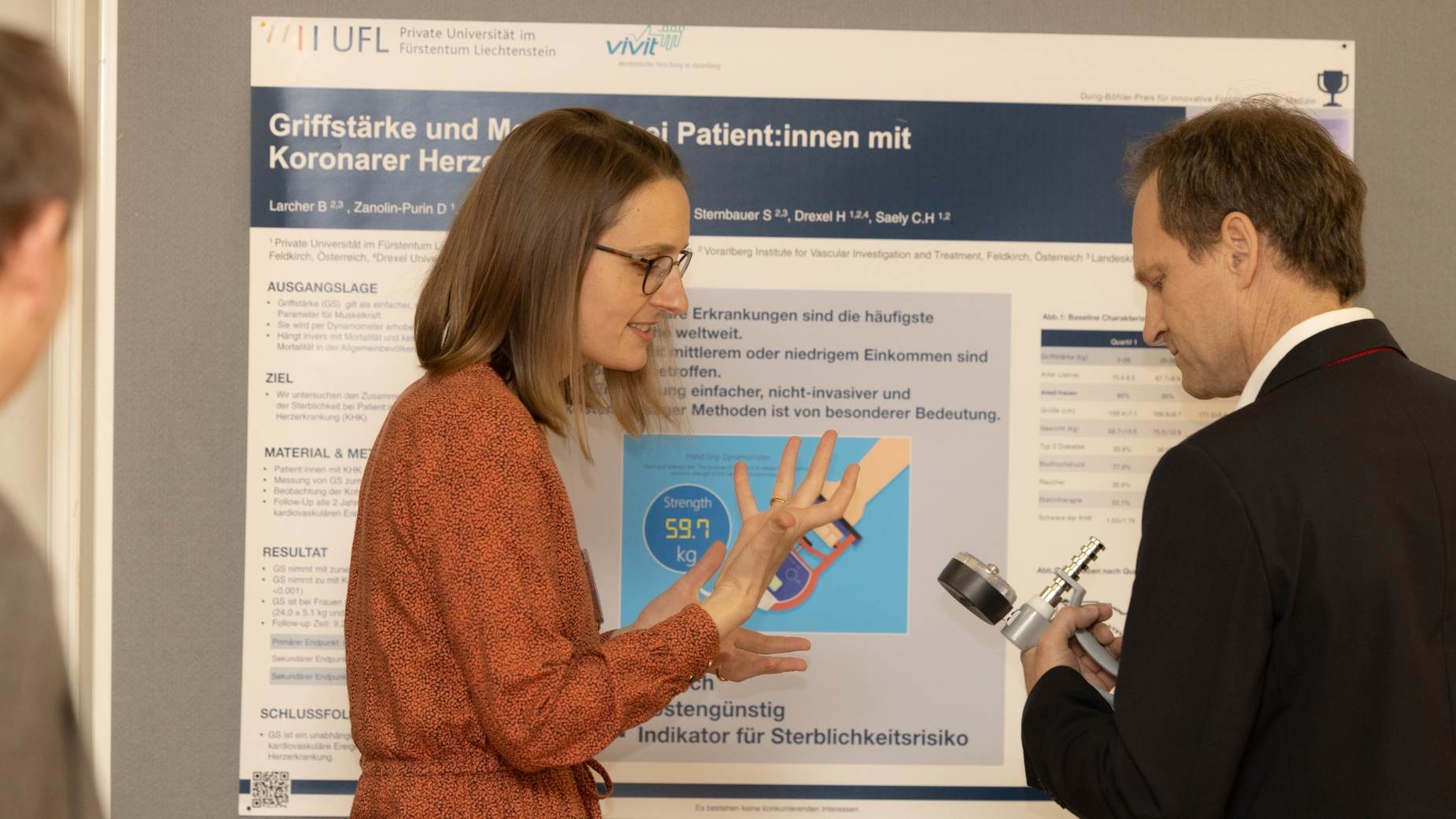
For Society and Practice
- open access to scientific knowledge
- faster implementation of new findings
- more transparent research
- sustainable knowledge transfer

For the University
- stronger international profile
- greater visibility of research outputs
- alignment with international research standars
- foiundation for future Open Science initiatives
Open Science at UFL
With the adoption of its intenational position on Open Science, the UFL has taken an important first step.
Elements of Open Science are already firmly embedded in research at UFL.
Numerous
Science communication events
2026
Adoption of the Open Science Policy
60 %
Open Access publications
Our Principles
- Transparency: We promote transparent and reproducible research.
- Openness: Scientific knowledge should be as accessible as possible.
- Responsibility: Data protection and ethical considerations are paramount.
- Collaboration: We strengthen interational research networks
Open Access
At UFL, publications are considered Open Access when they are available digitally and online, free of charge and free from most copyright and licensing restrictions. There are different routes to making research openly accessible, and the most appropriate publishing model will depend on the specific circumstances.
UFL regards Open Access as a university-wide commitment across all faculties. At the same time, it recognises the different publishing cultures and practices of its two faculties and encourages all researchers to take advantage of the opportunities offered by open access publishing – particularly in terms of greater visibility, knowledge transfer and transparency.
Open Access can be achieved through different routes. The following models outline the most common approaches:
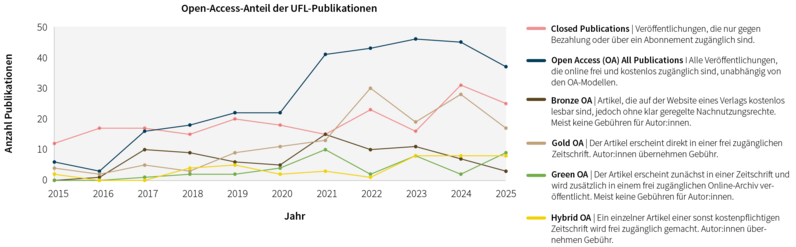
The publication appears directly in an open access journal and is immediately freely accessible.

The manuscript is additionally made aviable in an institutional or subject-specific repository.

Individual articles are made open access in a subscription-based journal upon payment of an article processing charge (APC)

The publiaction is free of charge for both authors and readers. The costs are covered, for example, bi institutional or funding bodies.

Around 60% of UFL’s scholarly publications – the majority of which originate from the Faculty of Medicine and Health Sciences – are already published Open Access, making an important contribution to the international visibility of UFL research. This development demonstrates that open access publishing practices are already firmly established at UFL, even though institutional funding mechanisms are planned for a subsequent stage.
Research Data (Open Data)
Research data comprise all data collected or generated in the course of research activities that support the validation and reuse of research findings. UFL regards open access to research data as an integral part of its Open Science activities, provided that this does not conflict with legal, ethical or contractual obligations.
Where research data are made openly available, they should follow the FAIR Principles (Findable, Accessible, Interoperable and Reusable), thereby promoting transparency, reproducibility and scholarly exchange. Personal data must be anonymised, confidential information protected and the rights of third parties respected. Whether, and to what extent, research data can be made openly available must be assessed on a case-by-case basis.
Open Resources
- Open Administrative Data
UFL is committed to making administrative data openly available where they are not subject to data protection or confidentiality requirements. This is intended to promote transparency, facilitate reuse by the research community and society, and contribute to digital transformation. - Free and Open-Source Software
When selecting and using software for research and administrative purposes, UFL recommends considering whether free and open-source software solutions can be used appropriately and effectively.
Science Communication
UFL regards science communication as a bridge between research and society. It aims to communicate research findings in an accessible and comprehensible manner, fostering transparency, dialogue and trust. UFL works to ensure that research findings are communicated in appropriate formats and made accessible to a wider public. The aim is to enhance transparency, strengthen public trust in research and highlight its societal value.
Through institutional communication channels – including events, publications and digital media – UFL seeks to foster dialogue between the research community and society. Researchers are also encouraged to communicate their work beyond academic publications by using appropriate formats such as public lectures, media contributions and digital channels, thereby increasing the visibility and societal impact of research.
UFL regards science communication as an important component of Open Science.
This includes, among others:
- Research Symposium
- Health & Life Sciences and Podium Recht events
- Wissenschaftsgespräche Triesen
- Public lectures
- The research magazine 160 zum Quadrat
- Digital information resources
- Recordings of events
These activities make scientific knowledge accessible to a wider public and foster dialogue between research and society.